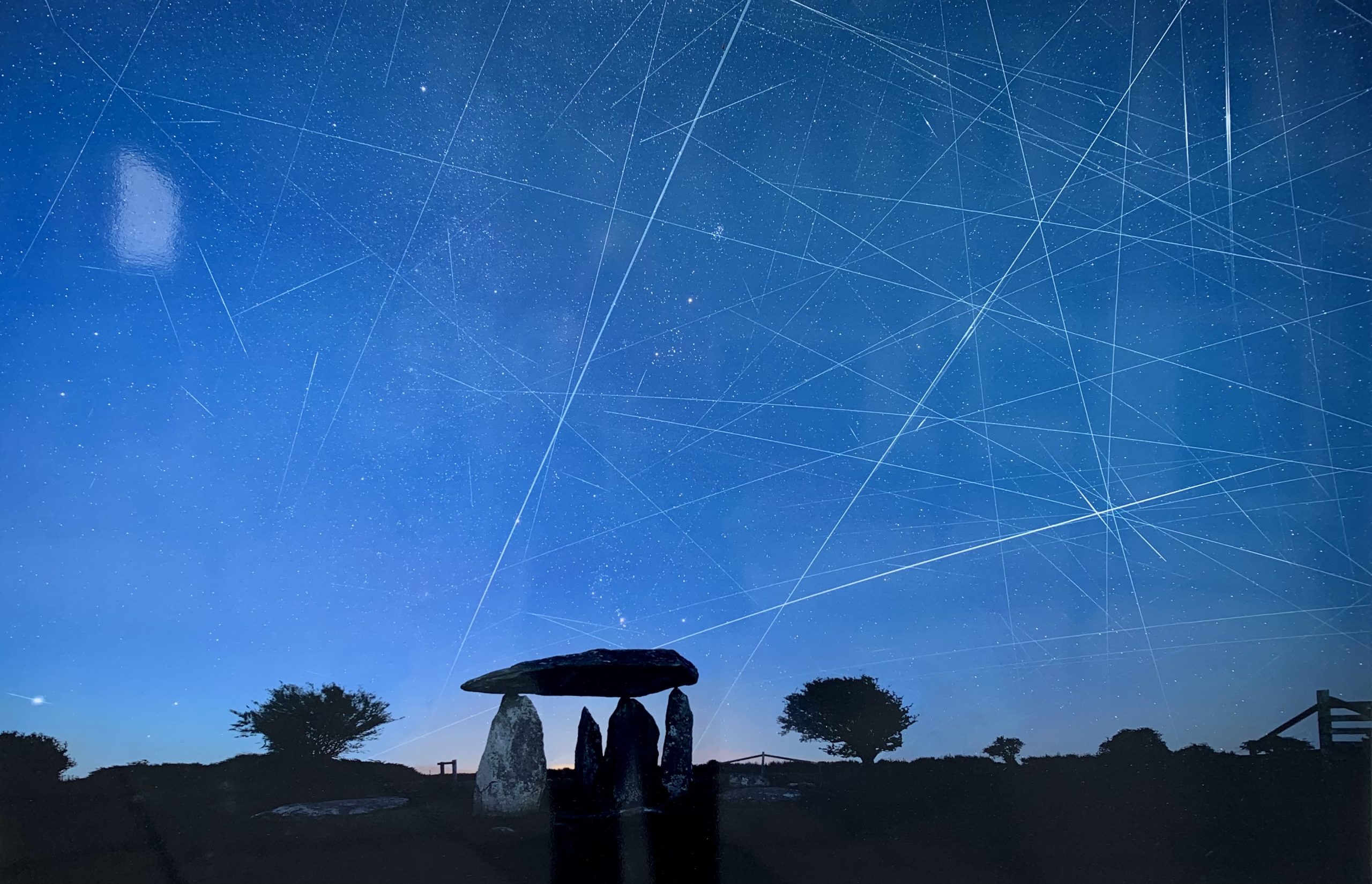
This show of photographs by Max Alexander took place during the recent Artemis space expedition in the courtyard of Burlington House, home of the Royal Astonomical Society
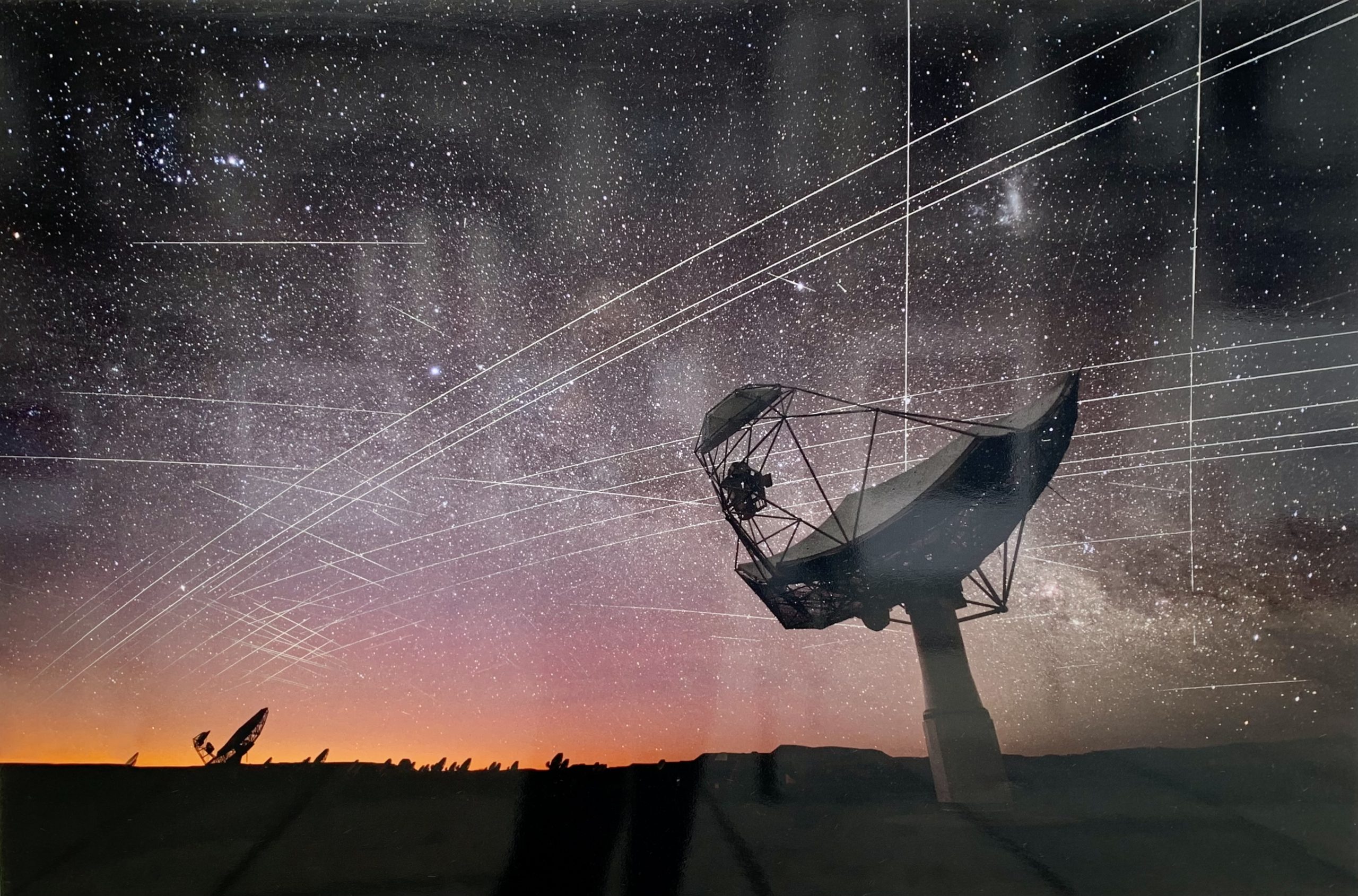
The first two photos here are of satellite trajectories giving an indication of the amount of space traffic above our heads. We are putting an increasing number or satellites in space for research, communication and surveillance with the resulting debris a growing and very serious problem.
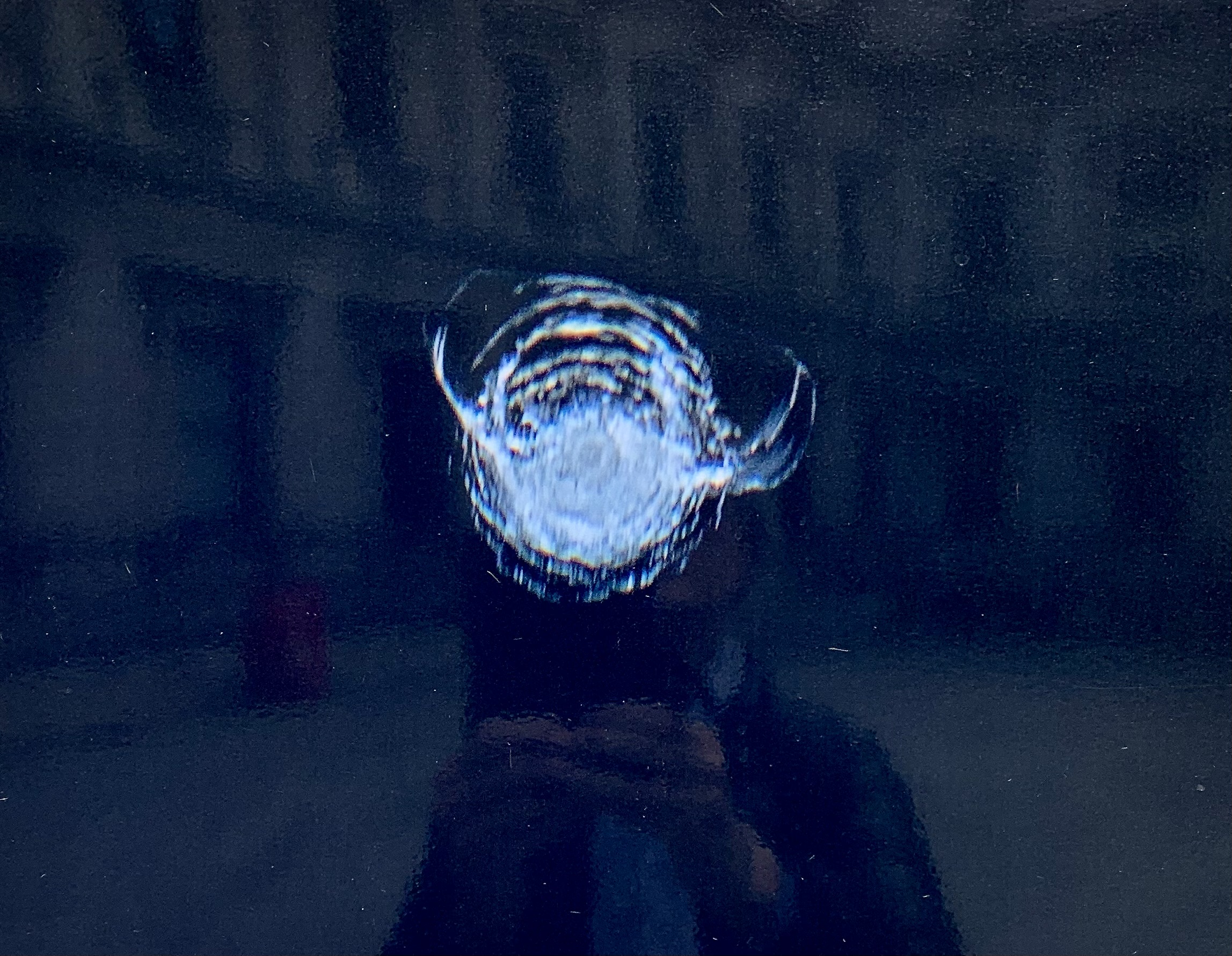
British astronaut Tim Peake took this photo of an impact crack in the window of the cupola module on the International Space Station during his time there in 2016. Imagine what would have happened if the window had broken.
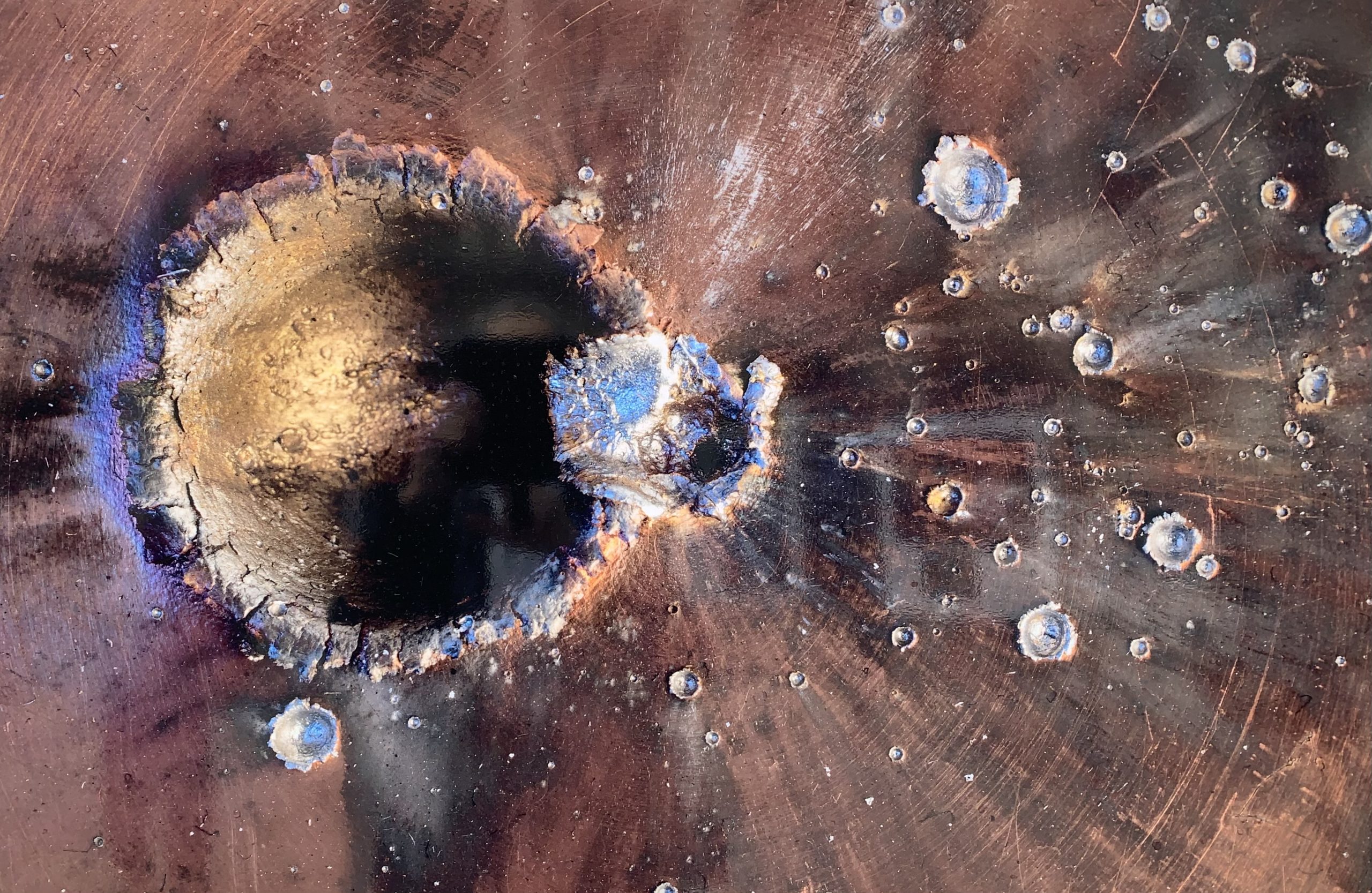
The photo below is of a test target showing the effect that a plastic object of 3mm across has on metal in orbit. That’s hypervelocity, a speed of 1 to 7.5km per second to you and me.
Donald J Kessler pioneered the study of space debris. He proposed back in 1978 that debris, left unchecked, could cause a chain reaction of satellite collisions, dubbed “The Kessler Syndrome“.
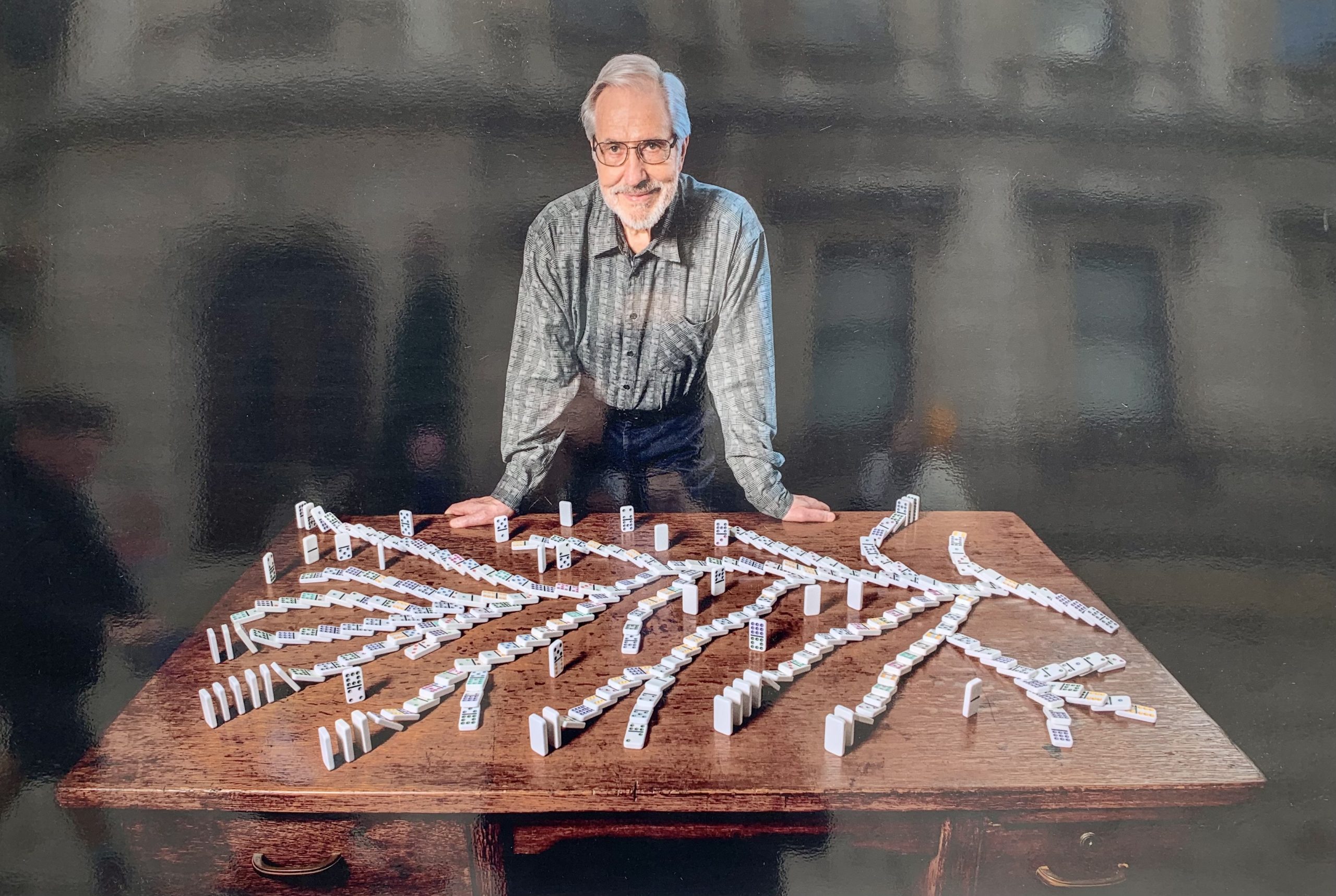
Since then various companies have searched for solutions, many of which involve encircling the debris before carrying it down to the atmosphere to burn up.
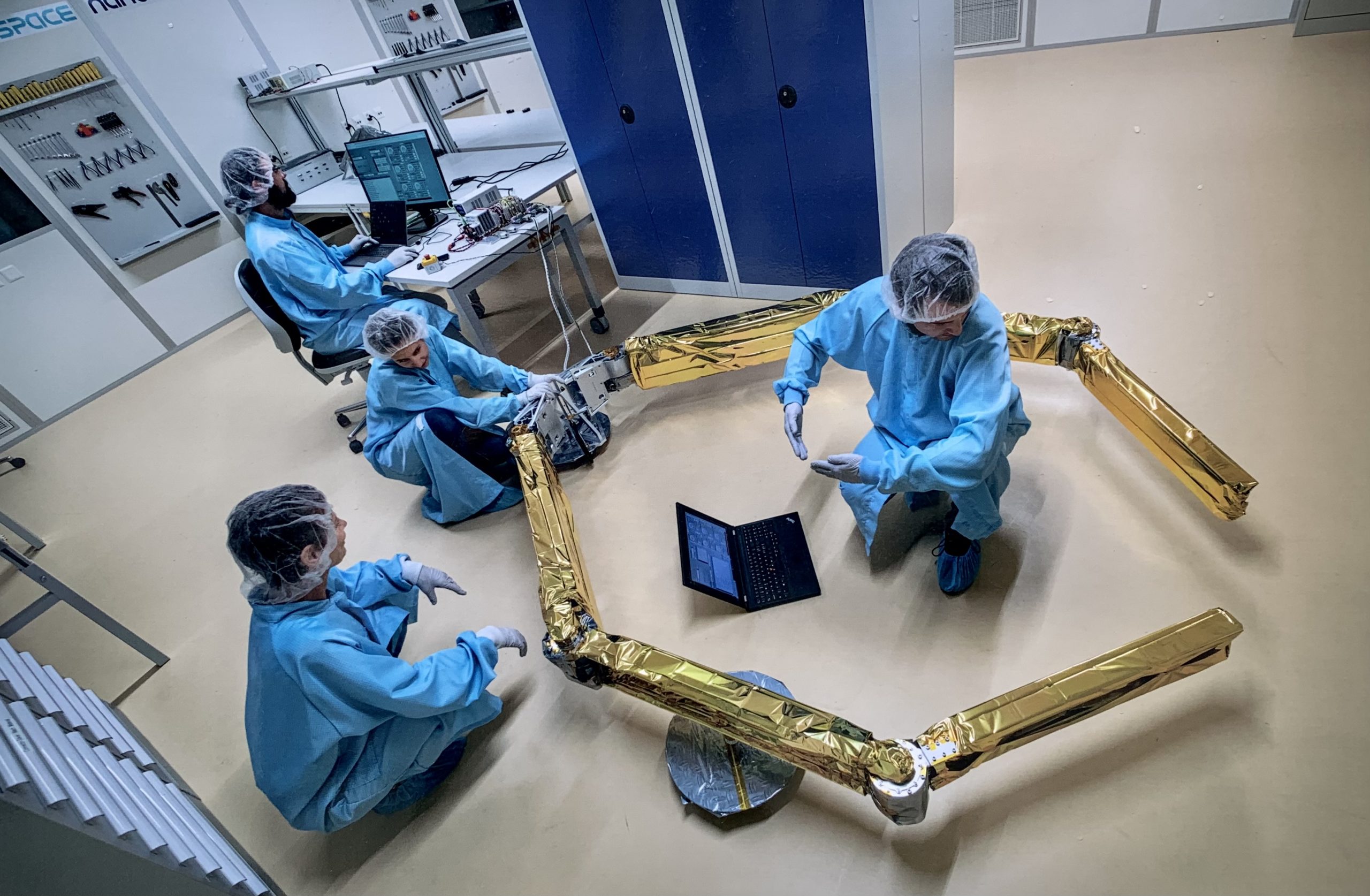
ClearSpace SA have developed a machine to capture or “hug” debris.
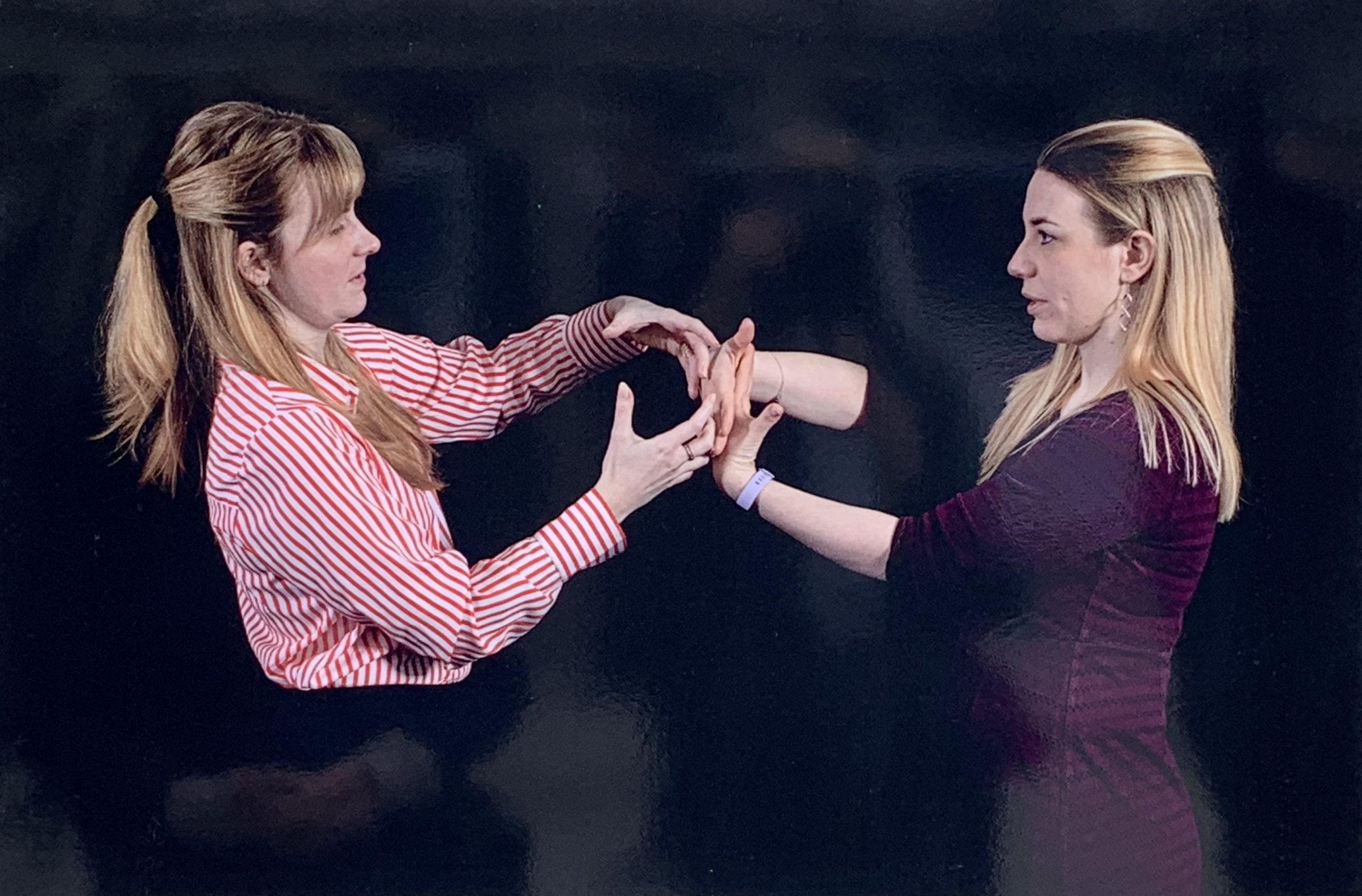
Zoe Tenacci & Rosie Linehan of Astroscale Ltd. demonstrate how debris could be clasped by another satellite.
I like the poetry of retrieval through the action of hugging.
All photos are by Max Alexander unless otherwise stated.